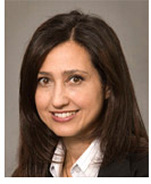
Helen Danesh-Meyer is the Sir William and Lady Stevenson Professor of Ophthalmology and the Founding Managing Trustee of GNZ. She is recognised internationally for her research in the area of glaucoma and neuro-ophthalmology with articles in the New Scientist regarding her work and numerous international lectures. Helen attended the University of Otago Medical School graduating in 1991 and undertook her ophthalmology training in Dunedin, Christchurch and Auckland. She subsequently did her sub-speciality training in glaucoma at Wills Eye Hospital in Philadelphia. Helen divides her professional activities almost equally between patient care activities and research/teaching. Her private practice is at Eye Institute where specialises in glaucoma, neuro-ophthlamology and cataracts. Helen has published more than 100 scientific articles including a textbook and several chapters. She has authored textbooks in both glaucoma and neuro-ophthalmology. Helen is also co-editor of the Clinical Challenges Section of the of an international journal, Survey of Ophthalmology, and serves as Neuro-ophthalmology Section Editor of two journals - Clinical and Experimental Ophthalmology and the Journal of Clinical Neuroscience.
| Identifying Dangerous Ophthalmologic Conditions
Main Session |
|||
| Friday, 21 June 2013 | Start 9:50am | Duration: 25mins | Baytrust |
This talk will focus on diagnosis that are critical for a GP to make urgently and symptoms and signs that will aid in this process. Diseases covered will include giant cell arteritis, acute glaucoma, and a discussion on when diplopia is dangerous.
| Glaucoma
Concurrent Workshop Repeated |
|||
| Friday, 21 June 2013 | Start 2:00pm | Duration: 55mins | Warhol |
| Start 3:05pm | Duration: 55mins | Warhol | |
| Office Examination of Visual Fields and Glaucoma
Concurrent Workshop Repeated |
|||
| Saturday, 22 June 2013 | Start 11:00am | Duration: 55mins | Opus |
| Start 12:05pm | Duration: 55mins | Opus | |
This session will focus on practical tips to assist in the diagnosis of ophthalmic conditions without the use of technical equipment. Skills that will be discussed include: how to detect an optic nerve problem, the best way to perform confrontation visual fields, and how to classify various causes of loss of vision into "dangerous" and "not so dangerous".